
How to Search Civil Dockets
For remote docket search, Alabama offers Alacourt ACCESS, the on-demand service also called Just One Look. A $9.99 name search comes with one case detail, and each extra detail costs another $9.99. Searching by case number also runs $9.99 with one detail included. Pick Marion County. Check the division too. Alabama prefixes tell you a lot. CV marks Circuit Civil. DV marks District Civil, and SM marks Small Claims.
The free option is the Marion County Circuit Clerk's public terminal at the courthouse. You can also make a written request in person or by mail. Phone help is available at 205-921-7451. One caution applies to remote docket search: a missing electronic result is not proof that no civil case exists.
- Identify the civil division from the claim, notice, or existing case number.
- Search by case number when possible, or use a party name and select Marion County.
- Match the case style, division, filing date, and party roles before buying another detail.
- Read the Case Action Summary from complaint and service through the newest setting and order.
- Request the signed judgment or other filing when the docket line does not provide its exact terms.
Marion Civil Dockets by Amount
Money and subject matter decide the track. Circuit Court handles civil actions above $20,000. It also takes workers' compensation claims plus the listed lower-court, administrative, and Probate appeals. District Civil covers $6,000.01 through $20,000. It also handles evictions and unlawful-detainer cases. Small Claims has its own division for anything within the current small-claims ceiling.
| Division | Marion docket scope | Code |
|---|---|---|
| Circuit Civil | More than $20,000, workers' compensation, and qualifying appeals | CV |
| District Civil | $6,000.01 to $20,000 and eviction or unlawful detainer | DV |
| Small Claims | Claims within the current small-claims ceiling | SM |
| Domestic Relations | Divorce and related Circuit matters, with privacy limits where applicable | Division-specific |
The official Marion Circuit Civil page lays out the upper-tier court and its local filing guidance.
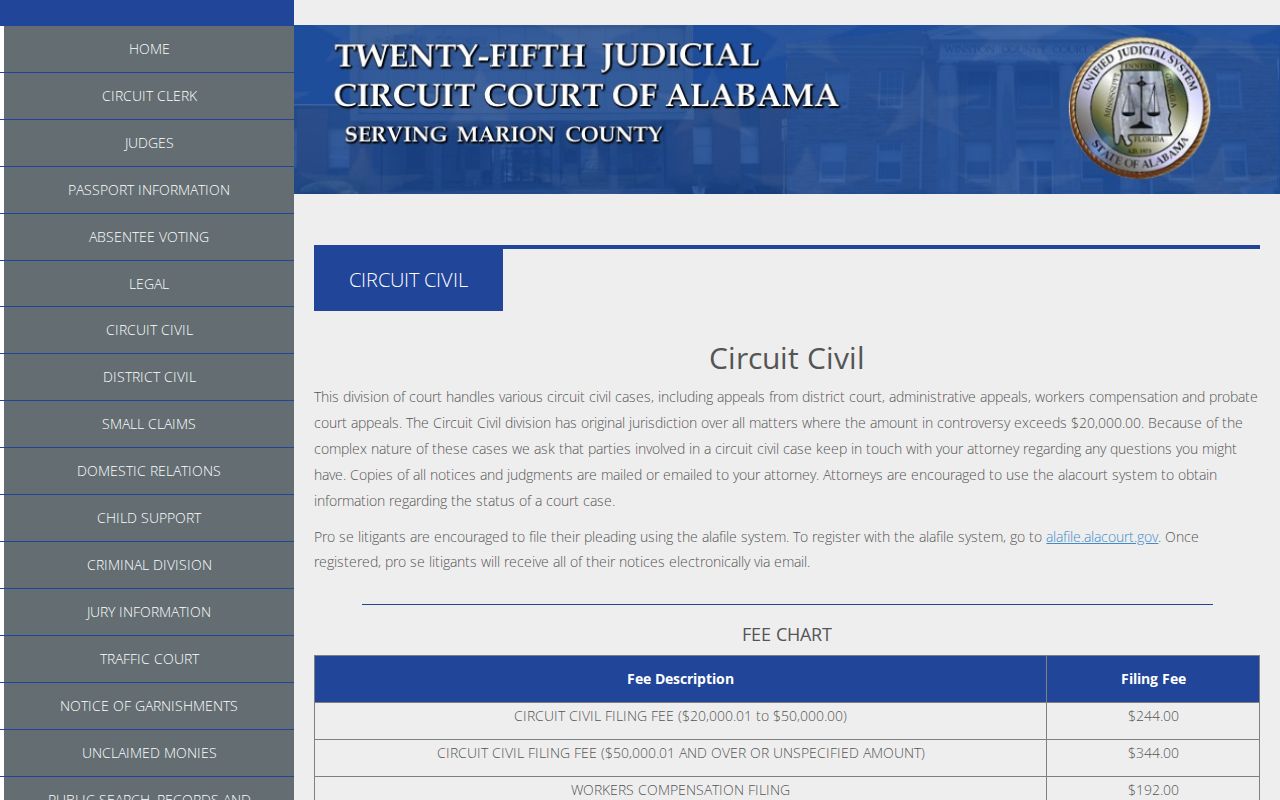
Use it to tell a Circuit filing from a District or Small Claims matter. That check saves money before any paid docket search begins.
What a Civil Docket Shows
A Case Action Summary is a dated index. It is not the whole file. Entries can show the case style, filing date, claim type, parties, counsel, service, complaint, answer, motions, settings, orders, judgment, costs, and available document images. Code labels differ by report, so confirm them in the live paid report or at the clerk terminal.
| Case header | Court, division, number, filing date, case type, judge, and status when supplied. |
|---|---|
| Parties | Plaintiff and defendant, or petitioner and respondent, plus attorneys and roles. |
| Service | Process issued and the return that records whether and how delivery occurred. |
| Filings and rulings | Complaint, answer, motions, notices, orders, and their entry dates. |
| Judgment activity | Final judgment, dismissal, appeal, execution, garnishment, or later enforcement entries. |
For operative relief, read the image of the signed judgment itself. A one-line summary rarely carries every term.
Marion Civil Docket Filing Fees
Filing fees and court-event charges mark the civil path. They are not docket-viewing prices. Marion's published schedule sets $244. That covers a Circuit civil action from $20,000.01 through $50,000. Above $50,000, or when no amount is stated, the fee is $344. A District civil filing for one defendant from $6,000.01 through $20,000 costs $245.
| Event | Published amount |
|---|---|
| Workers' compensation filing | $192 |
| Jury demand | $100 |
| Subpoena | $12 |
| Execution | $30 |
| Default or summary-judgment motion | $50 |
| Garnishment | $30 |
Viewing a Marion County civil docket at the clerk terminal, by contrast, is free. Clerk copies follow the separate $5 first-20-pages schedule.
AlaFile and Marion Civil Dockets
AlaFile and Alacourt do different jobs. AlaFile is the filing and electronic-service application. Alacourt ACCESS is the public remote reading layer, while the courthouse terminal is the free local reading layer. The clerk encourages pro se Circuit Civil filers to register for AlaFile so notices arrive by email. That access never replaces the official clerk file.
Current 2026 e-filing procedures make one point plainly: email sent to a clerk or judge is not a filing. The generated E-file Receipt and its timestamp control. Civil complaints, fees, and summons workflows can all run through the application, including certified-mail, sheriff, and special-process-server paths. Those steps may later show up as entries on the civil docket.
Keep file and read separate. An AlaFile login is not a free public Case Action Summary search.
Types of Civil Cases on the Docket
Marion County civil dockets hold several tracks. The court and code matter, since they set where a case begins and how an appeal later appears. One clerk office maintains all these state-court records, but each division keeps its own jurisdiction and procedures.
- Circuit civil actions above $20,000 and workers' compensation cases
- District civil claims from $6,000.01 through $20,000
- Eviction and unlawful-detainer matters in District Court
- Small Claims cases within the current statutory ceiling
- Domestic-relations matters and qualifying lower-court or Probate appeals
The Marion District Civil page documents the local lower-tier rules and amounts.
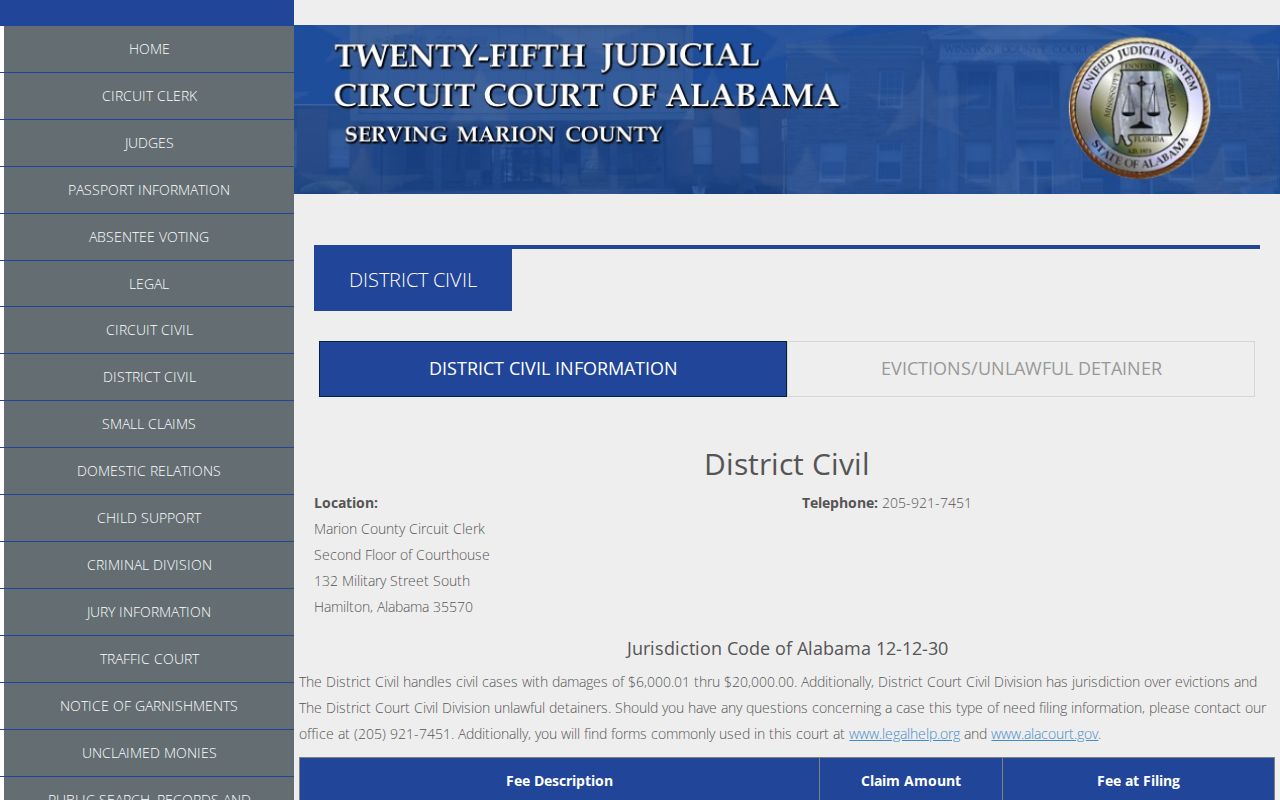
Its details matter most for eviction deadlines and appeals. There, a day's delay can carry direct procedural effects.
Reading Marion Civil Docket Service
Read service entries in order. Find the complaint or petition first. Next, spot the entry showing that process issued, then the return recording whether and how delivery happened. After that, look for the answer, any default-related request, motions, hearing notices, and orders. A filing date alone does not prove another party received process.
Marion's Circuit Civil page explains the summons paths. Those may involve certified mail, the sheriff, or a special process server. Current e-filing procedures support those workflows, and the docket records their progress. Service may control a deadline or a default question. Then get the underlying return or order rather than trusting a brief docket phrase.
Marion Civil Dockets: SM and Eviction
Small Claims in Marion County runs under the SM prefix. It is easy to mistake one of these cases for a CV action. Check the code before you assume anything. Evictions filed in District Court travel the District Civil route instead. Under Marion's local instructions, an eviction defendant gets seven calendar days to answer the possession complaint. A money claim filed in District Court gets 14 calendar days to answer. Those deadlines belong to that setting only. They are not a blanket rule for every civil action.
What happens if no answer comes in? The other side may seek a default. The published fee for a default or summary-judgment motion is $50, a court-event charge rather than a fee for reading the docket. The same local page sets a seven-calendar-day appeal window. It is tied to the final eviction order and post-trial rulings, with transfer to Circuit Court. The Marion Small Claims resource explains the separate local filing route.
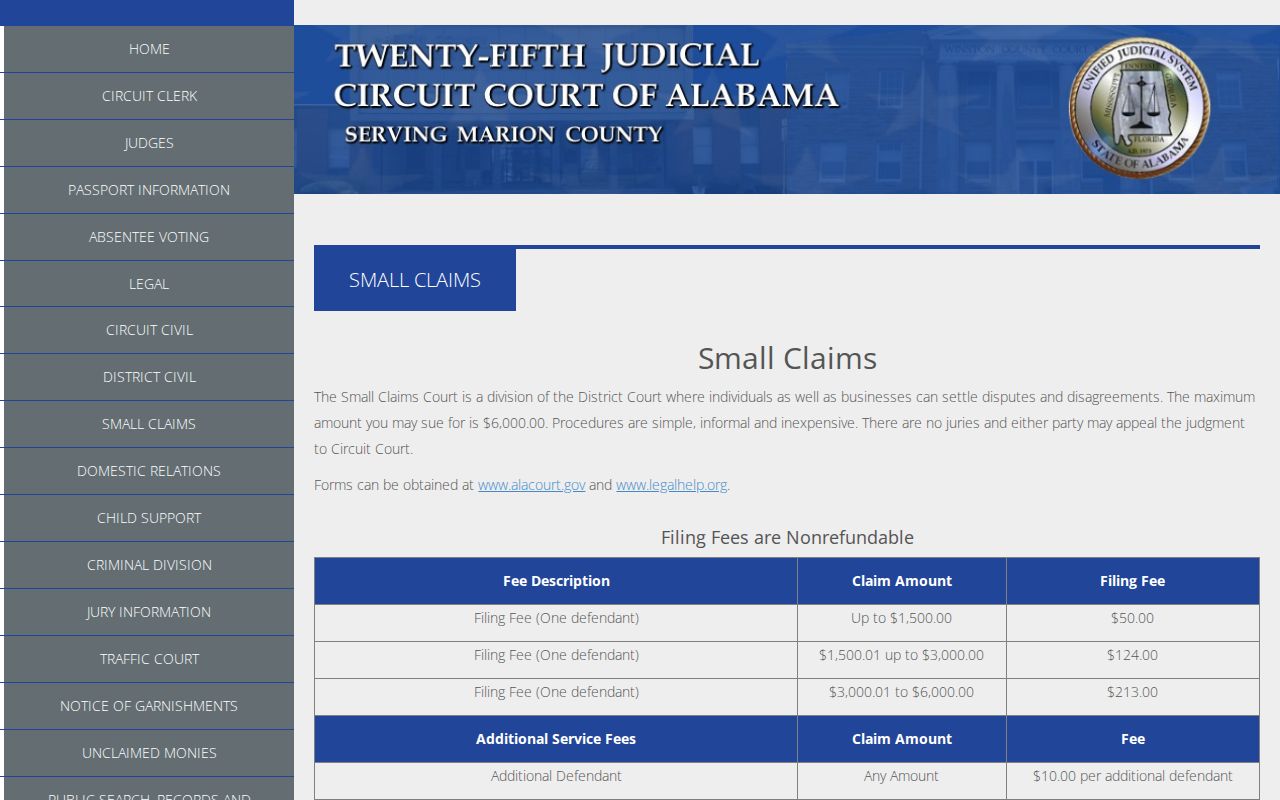
That page drives home one lesson: pick the right division in Marion County before you search or pay any filing fee.
Settings and Hearings on Civil Dockets
A Marion County civil docket lists many settings. Examples include a motion hearing, a pretrial conference, a bench trial, a jury trial, or some other case-specific event. The notice of setting puts the matter on the calendar. Dates can shift, though. A continuance or reset displaces the earlier date. Read the chronology around every setting rather than stopping at the first entry you see.
Where do you confirm a date? The county posts no free standalone daily or weekly web calendar. Use the paid Alacourt setting information or docket search. Try the free clerk terminal, the Circuit Clerk's phone line, or the assigned judicial office when a date stays uncertain. The Marion County court calendar walks through the confirmation chain step by step.
One scheduling order can carry several deadlines and events at once. Pull the order image whenever a docket line abbreviates the schedule. Then compare it against any later order that modifies a date.
Marion Civil Appeals Create Dockets
An appeal does not erase the first case. It can add a second Marion County civil docket on top of the original. Circuit Civil hears qualifying appeals from District Court, administrative matters, and Probate Court. In eviction cases, the District Civil page describes the transfer to Circuit Court. That applies once the stated local appeal steps are met.
Write down the originating case number, the notice of appeal, and the new Circuit number. From there, follow the Circuit chronology for later settings and rulings. A Circuit appeal can move onward. The Alabama Court of Civil Appeals is the next step. The governing route must allow it. Which court record you need depends on the stage and the order you are chasing.
After Marion Civil Docket Judgment
A Marion County civil docket can stay active long after judgment. An execution entry deals with enforcing the judgment. A garnishment entry records a separate enforcement process. Neither one is a second merits judgment. An appeal, meanwhile, opens new activity at the next court level. The original file still shows the notice and transfer steps.
- Default judgment
- A judgment entered after a party fails to answer or defend, following the required process.
- Summary judgment
- A disposition without trial when the governing legal standard is met.
- Voluntary dismissal
- A claimant ends some or all claims; the recorded terms and prejudice language matter.
- Execution
- A post-judgment enforcement step recorded after the merits decision.
- Garnishment
- A separate post-judgment collection process, not a new ruling on the original claim.
Always retrieve the signed order or judgment before deciding what the court required.
Marion Domestic Civil Dockets
Domestic-relations cases sit inside a Circuit Court civil division. Yet access works differently than for an ordinary contract or property case. Metadata may stay public. Meanwhile a sensitive filing, a protected identifier, or a sealed portion stays restricted. So a missing image does not mean nothing was filed. The Marion Domestic Relations page names the local division and its official route.
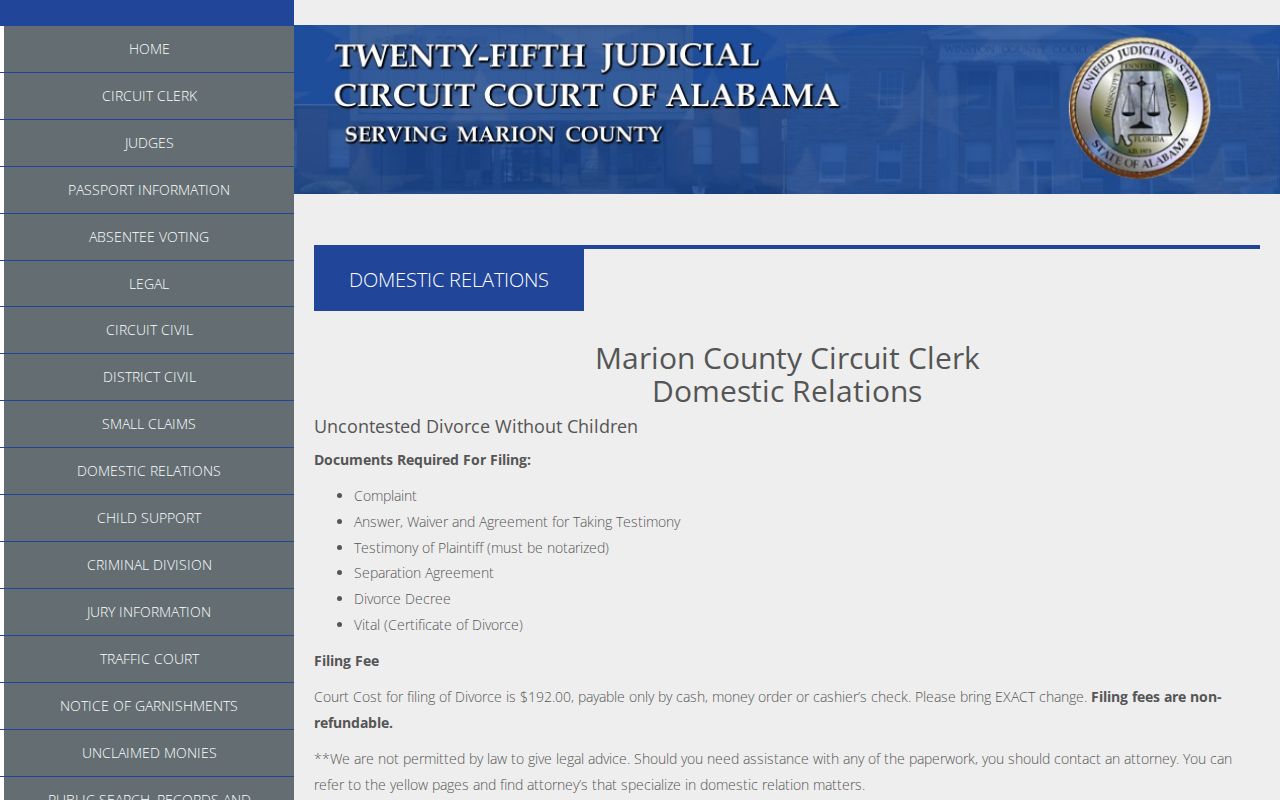
Read the division page alongside the current Alabama privacy rules before deciding which case data or filing you can view. Child-support work runs through its own channel in the clerk structure. The Marion child-support page identifies that route.
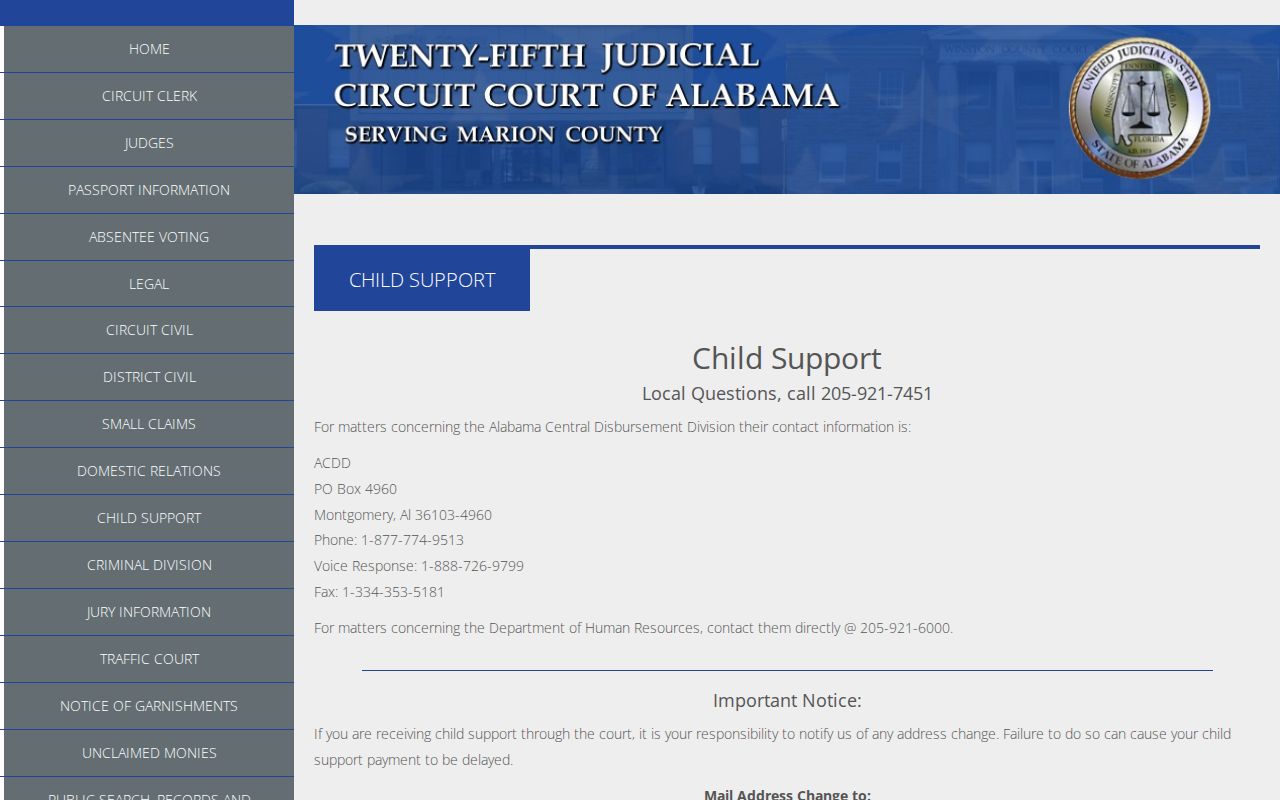
That separate official channel helps route a request in Marion County. It also preserves the access limits that guard sensitive case material.
Public Access to Civil Dockets
Alabama's Rules of Court-Record Privacy and Confidentiality, effective January 1, 2025, set the Marion baseline. Electronic District and Circuit dockets and filed records can be viewed at no charge in the clerk's office during regular hours. Copies may carry fees, mail requesters supply postage, and remote access runs through a paid subscriber service.
Marion civil access: Rules 103 and 201 define court records and the clerk-office access route. Judicial Administration Rule 33 governs electronic court data access. Ala. Code §§36-12-40 through 36-12-47 provides public-record request procedures without overriding court confidentiality or sealing.
Copies cost $5 for up to 20 pages, then $0.50 per page after that. Certification adds $5. For mail, send a money order and a self-addressed stamped envelope. Allow up to 30 days. If a filing is restricted, ask the clerk. Request a redacted copy or the public metadata. The clerk cannot waive a court order or confidentiality rule.