
How to Search Criminal Dockets
For remote searching, use Alacourt ACCESS, also called Just One Look. A name search costs $9.99 and includes one case detail. A case-number search costs the same and covers one detail too. Each additional detail from a name result adds another $9.99. Even a no-match name search still counts as paid. So a known case number is the smartest start.
Want it free? Use the public terminal in the Marion County Circuit Clerk's office. That office also takes precise written requests in person or by mail. Staff can point you to the right channel by phone. Municipal citations stay with the named city clerk unless an appeal opens a Circuit Court docket.
- Identify Circuit Criminal, District Criminal, or a municipal court from the latest notice.
- Use the case number when known, or select Marion County and run the paid name search.
- Open the matching Case Detail and confirm the court, division code, parties, and filing date.
- Read the Case Action Summary in date order and find the newest setting and disposition entries.
- Verify uncertain data at the free terminal or call the Circuit Clerk before relying on it.
The Marion criminal division page shows the local offices that support this process.
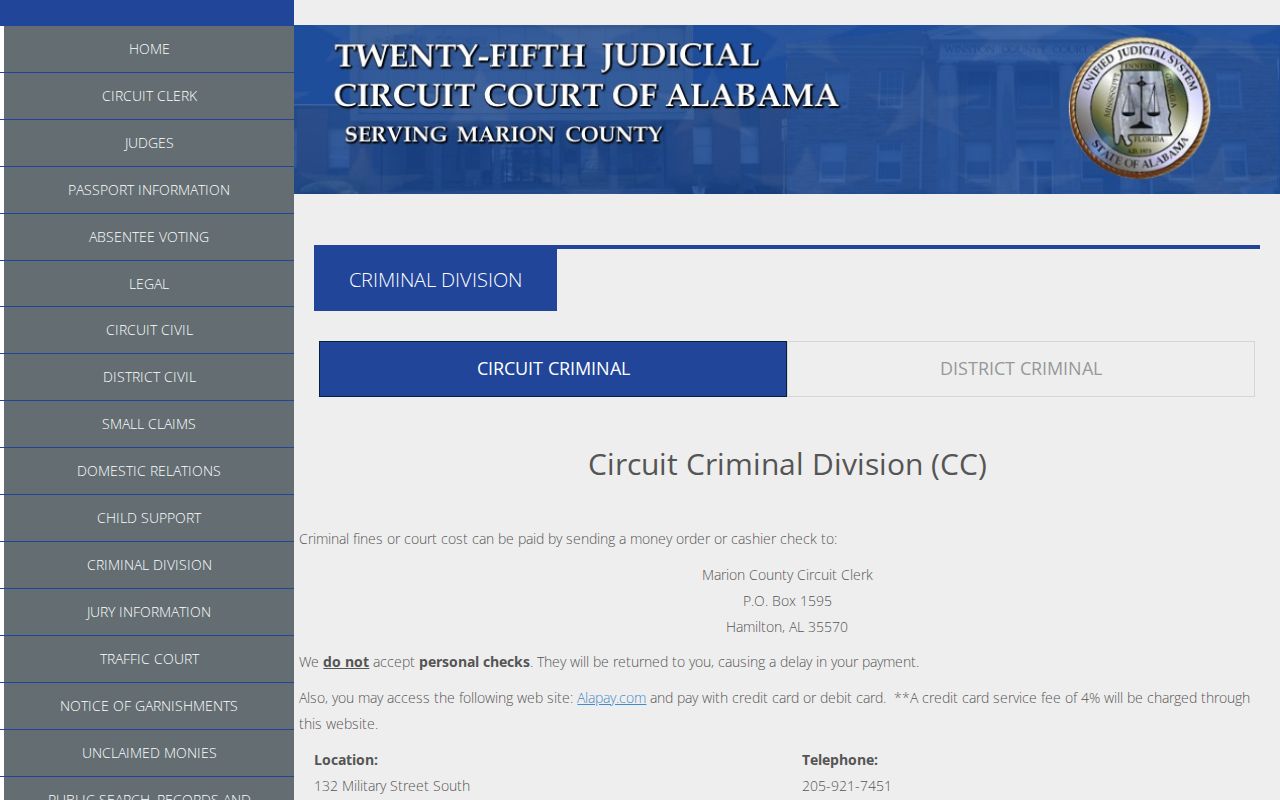
One clerk office handles both criminal levels, so the division page saves you from hunting for a separate county criminal records keeper.
Marion Criminal Dockets: CC or DC
Marion County runs one Circuit Clerk but splits criminal work by court level. Felony prosecution and final felony proceedings appear under the CC division code for Circuit Criminal. District Criminal carries the DC code, covering misdemeanors and preliminary felony work. So a felony may show District entries first. A later Circuit case then handles the final prosecution.
| Court | Marion criminal docket role | Custodian |
|---|---|---|
| Circuit Court | Felony proceedings, judgment, sentencing, and lower-court appeals | Marion County Circuit Clerk |
| District Court | Misdemeanors and preliminary felony stages | Marion County Circuit Clerk |
| Municipal Court | City ordinance and qualifying city criminal or traffic matters | Named municipal clerk |
When a matter jumps between levels, record both case numbers and any cross-reference. An old District entry never substitutes for the later Circuit docket.
What a Criminal Docket Shows
Think of the Marion County Case Action Summary as an index. It is also a timeline of court events. It may show the case header, parties and roles, charges, counsel, bond activity, settings, rulings, plea, disposition, sentence, costs, and links to images. The free public interface does not reveal every field label. Before reading meaning into a code, verify it. Check against a paid Case Detail or the clerk file.
| Case identity | Court, CC or DC division, number, filing date, and status. |
|---|---|
| Charge block | Offense description or classification; the charging instrument supplies exact allegations. |
| Case activity | Dated filings, returns, counsel appearances, motions, settings, orders, and bond entries. |
| Outcome | Plea, judgment, sentence, disposition date, and later appeal or compliance activity. |
| Financial data | Costs, assessments, payments, and balances when available for the case. |
A line saying an order was entered is not the signed order itself. Buy or request the image when exact terms matter.
Reading Marion Criminal Docket Outcomes
Treat the charge, plea, and judgment as separate blocks. A charge states what was alleged. A plea records the defendant's answer. A judgment captures the court's adjudication. Infer none from the others. Similarly, "disposed" only means the case reached a recorded disposition, not whether it ended in dismissal, nolle prosequi, conviction, acquittal, or something else.
- Nolle prosequi
- A prosecution entry stating that a charge will not proceed at that time, subject to the recorded legal context.
- Bond forfeiture
- A bond consequence tied to a missed required appearance, not the complete outcome of the criminal case.
- Disposition
- The recorded result for a charge or case. Later collection, appeal, or compliance events can still follow.
- Restricted
- Public access is limited by rule, law, or court order. It does not mean the case never existed.
For the procedural rules behind these entries, see the Alabama Rules of Criminal Procedure.
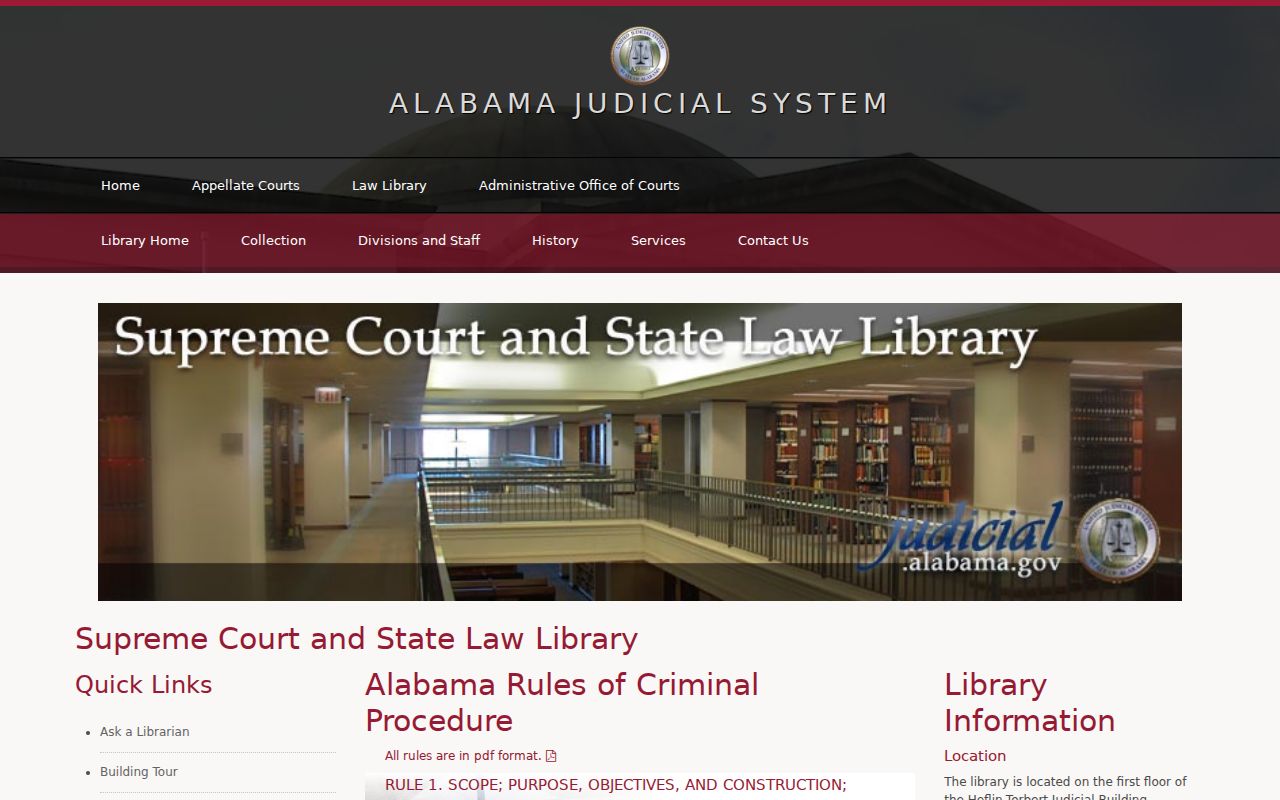
That rules index helps most after the Case Action Summary pinpoints the event needing a closer look.
Stages on a Criminal Docket
A Marion County criminal docket builds in sequence, though no case has every event. District Court may hold early felony-stage activity like a preliminary hearing. Circuit Court later runs the felony prosecution. Misdemeanors generally stay on the District criminal docket. Settings and orders can repeat when the court resets a hearing.
Docket flow: Filing › Arraignment › Pretrial › Plea or Trial › Disposition › Sentencing
Begin with the oldest filing. Work forward from there. Look for the charging paper or indictment, service or warrant return, counsel appearances, bond entries, plea, motions, settings, judgment, and sentence. A newer setting may follow an older one. Confirm which date controls before treating both as active. The wider Marion County case search covers name and number lookup options.
Marion Criminal Docket Reset Checks
A reset is a new setting, not a dismissal. If the Marion County criminal docket lists more than one hearing date, read each dated entry and find the newest notice or order. The earlier date stays in the Case Action Summary because it remains part of the history.
When the reason for a change or the current date is unclear, call the Circuit Clerk at 205-921-7451 or the criminal division at 205-921-4301. The assigned judicial office can confirm a setting the clerk record does not resolve. Never trust an old calendar entry, and never assume a vanished setting ended the prosecution.
AlaFile and Marion Criminal Dockets
AlaFile is Alabama's electronic filing and service application. It feeds documents into the unified court record. It is not the everyday free docket reader. The public reads through Alacourt ACCESS or the courthouse terminal. That matters when a filing exists but has not yet surfaced in a public result.
Under Alabama's revised 2026 electronic filing procedures, things are strict. Emailing a clerk or judge is not a filing. The system-generated E-file Receipt and its timestamp control the submission. Image completeness stays the filer's job, and not every document type must be accepted electronically. The official electronic-filing orders timeline shows how those rules took shape over time.
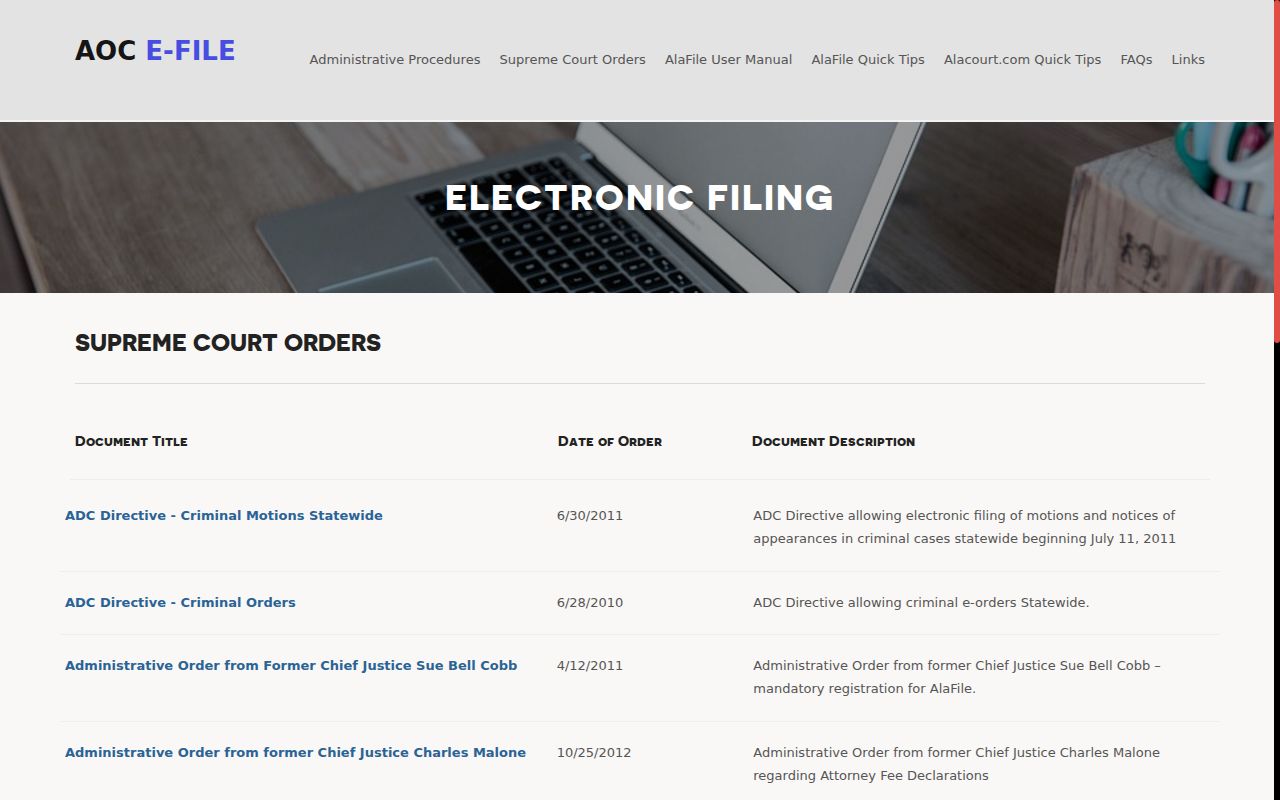
Those filing orders trace how e-filing grew apart from the tools people use to read Marion County criminal dockets.
Which Court Holds Criminal Dockets
Both the Circuit and District criminal dockets for Marion County sit with the Circuit Clerk. Visit the counter on the second floor at 132 Military Street South in Hamilton. The main line is 205-921-7451. The criminal division also lists 205-921-4301, and mailed requests go to P.O. Box 1595, Hamilton, AL 35570.
City cases run on a separate track. Ordinance violations and municipal criminal traffic matters stay with the clerk in Hamilton, Winfield, Guin, Hackleburg, or Bear Creek until an appeal turns them into a Circuit Court case. Juvenile matters sit inside the state system too, though confidentiality limits differ. Probate cases never belong in criminal court.
The clerk's public hours are 8:00 a.m. to 4:30 p.m., Monday through Friday, with a noon-to-1:00 closure, and a free docket lookup is available then. Call ahead if a setting, division, or file location is unclear.
Marion Criminal Docket Caseload
The Alabama Unified Judicial System's FY2023 report puts real scale behind the docket volumes. Marion Circuit Court logged 1,305 total filings, and 64% of those were criminal. District Court is far busier. But it is mostly on the civil and traffic side: 6,565 filings, with 12% criminal and 66% traffic. Those percentages are rounded categories from the report. They predict nothing about how long one case takes.
The CC and DC division split explains a lot of the pattern. What the totals cannot tell you is a backlog, a processing time, or the next setting on any Marion County criminal docket.
Paying Marion Criminal Docket Costs
Payment entries can appear in a Marion criminal docket. But paying costs is not pulling the docket. It is not a signed judgment either. By mail, the criminal division takes a money order or cashier's check only. Include the District Criminal case number with the payment; personal checks get rejected. Confirm the case and the balance before any funds go out.
For paying online, the clerk links the AlaPay portal. Cards there carry a 4% service charge per the Marion clerk.
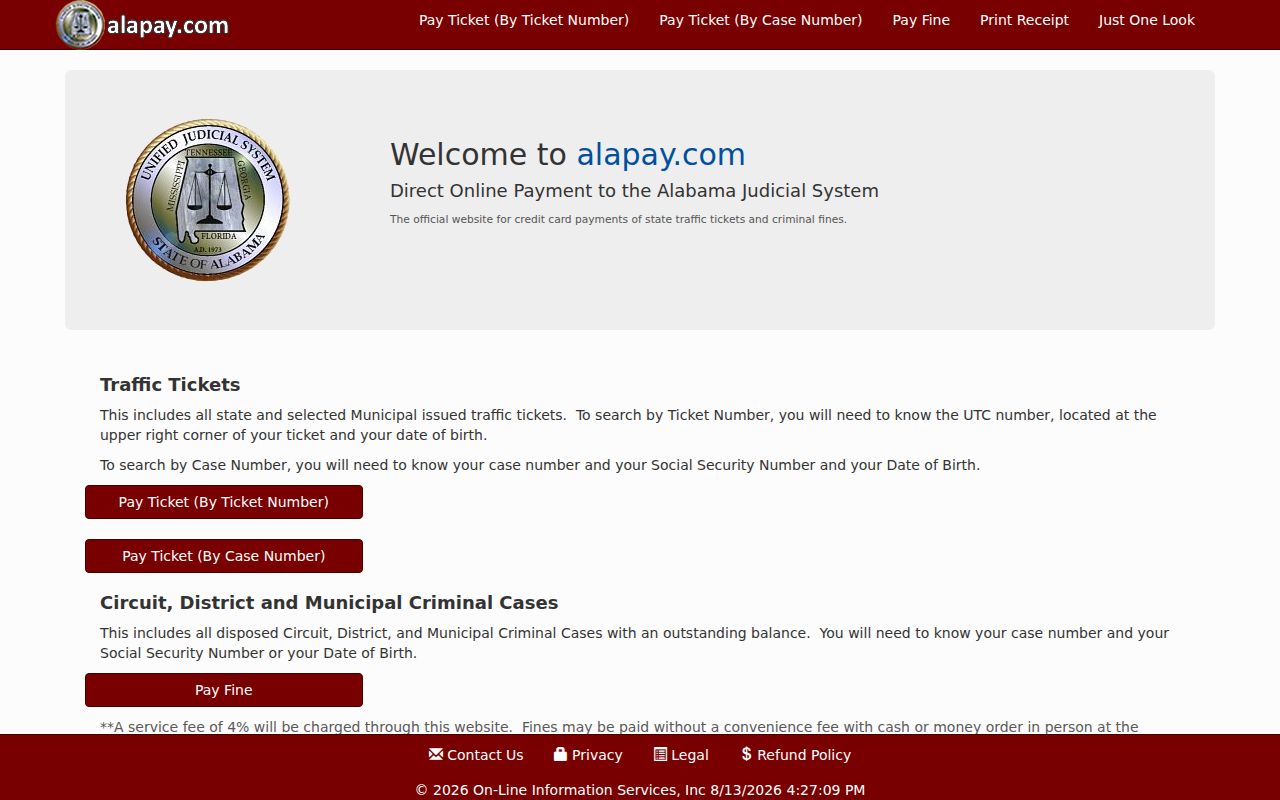
AlaPay can settle eligible court debt. It does not replace the Case Action Summary, the document image, or a certified copy from the clerk.
Note: Use the court record to confirm the case number and current balance before choosing mail or online payment.
Getting Marion Criminal Docket Orders
Sometimes a docket line is too thin. Ask the Marion County Circuit Clerk for the actual judgment, sentencing order, or other filed document. Give the case number, case style, division, document name, and filing date if you know it. Say whether the copy needs certification. Mail requests should include a self-addressed stamped envelope plus a money order. The clerk warns that minimal staffing can stretch processing to 30 days.
Fees are posted. Copies run $5 for up to 20 pages. Then it is $0.50 per page after 20, and certification adds $5. A remote document image follows the same first-20-page scale when available. Spoken words in court are different: contact the court reporter, since a transcript is not a filed order.
Marion Criminal Dockets and City Cases
A ticket from the city does not open a District Criminal case just because the city sits inside Marion County. Ordinance cases and qualifying city criminal or traffic matters stay with the municipal clerk named on the citation, and Hamilton, Winfield, Guin, Hackleburg, and Bear Creek each keep that first record.
An appeal can change that. A qualifying municipal appeal creates a new Marion Circuit Court docket for trial de novo, meaning a fresh trial rather than a review of the municipal record, so keep both the municipal number and the later Circuit number. Felonies and anything outside municipal jurisdiction travel the state-court route, not the city route.
Public Access and Sealed Criminal Dockets
Most Marion County criminal docket data is open to inspection. Open is not the same as unrestricted, though. Some entries may be missing, masked, or limited. That includes juvenile records, youthful-offender material, protected identifiers, expunged information, and sealed portions. A search that comes up empty can also trace to the wrong court, a spelling slip, an older paper file, or processing delay. Or the case may not be in the electronic system yet.
Key access rules:
Alabama Rules of Court-Record Privacy and Confidentiality provide free public viewing of District and Circuit electronic dockets and filed records at the clerk's office during regular hours, subject to restrictions.
Rule 33, Alabama Rules of Judicial Administration preserves clerk-office inspection while placing statewide electronic court data under AOC control.
Ala. Code §§36-12-40 through 36-12-47 describe public-record request procedures, while court confidentiality rules and sealing orders still control restricted material.
The Circuit Clerk cannot waive a restriction. Ask instead whether public metadata or a redacted copy exists, then follow whatever party-status or court-order process the record demands.